
Doing analysis of electronic music also means understanding – in addition to the audio, sketches, score (if any) and technology – the circumstances that led an author to create the piece.
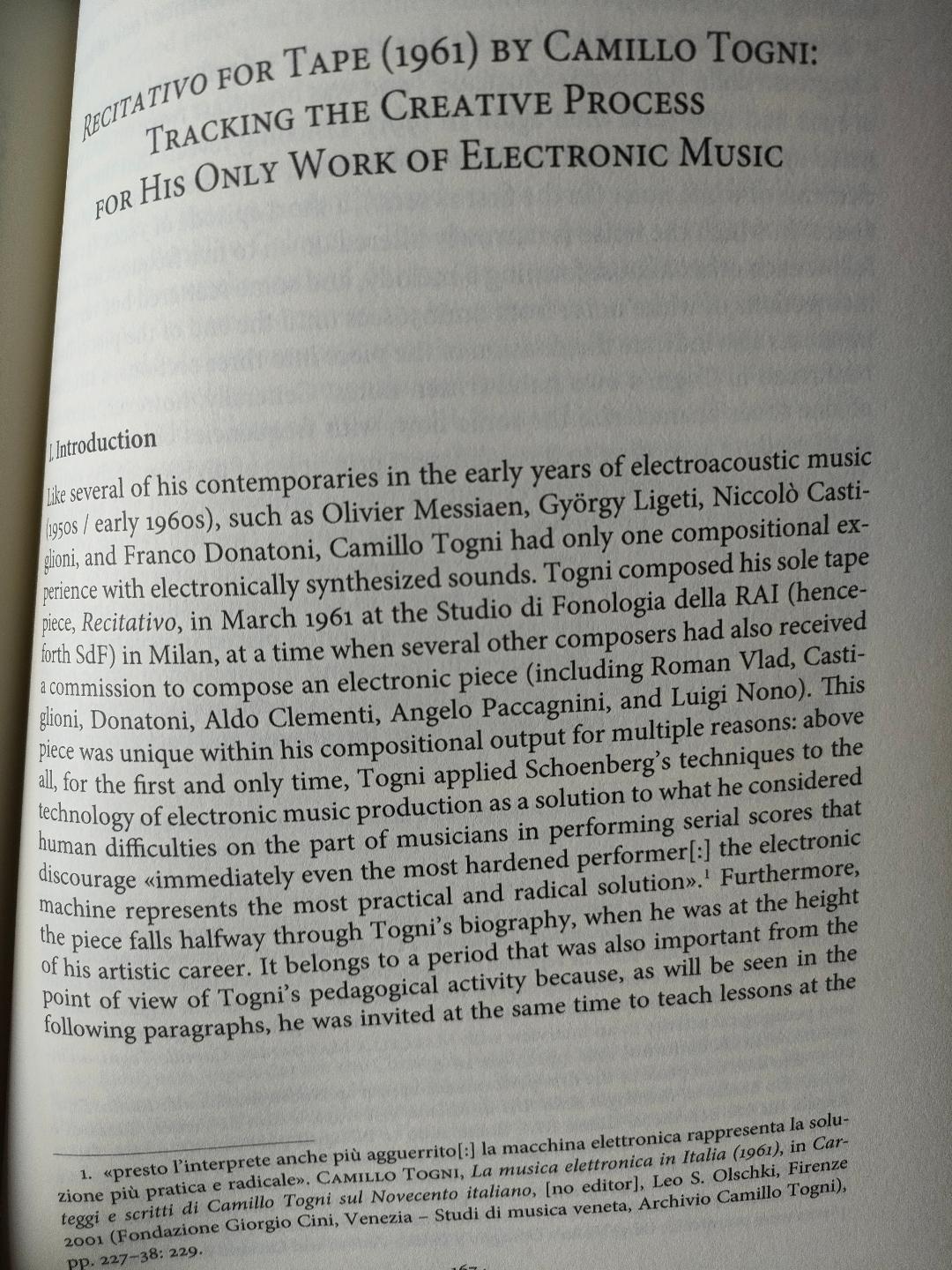
“Recitativo for Tape” (1961) is the only work of electronic music made by Italian composer Camillo Togni who embraced dodecaphony and integral serialism. Like several of his contemporaries in the early years of electronic music such as Ligeti, Messiaen, Donatoni, Castiglioni, after this intense experience of a few months at the Studio di Fonologia of RAI in Milan Camillo Togni decided to abandon this type of compositional approach.
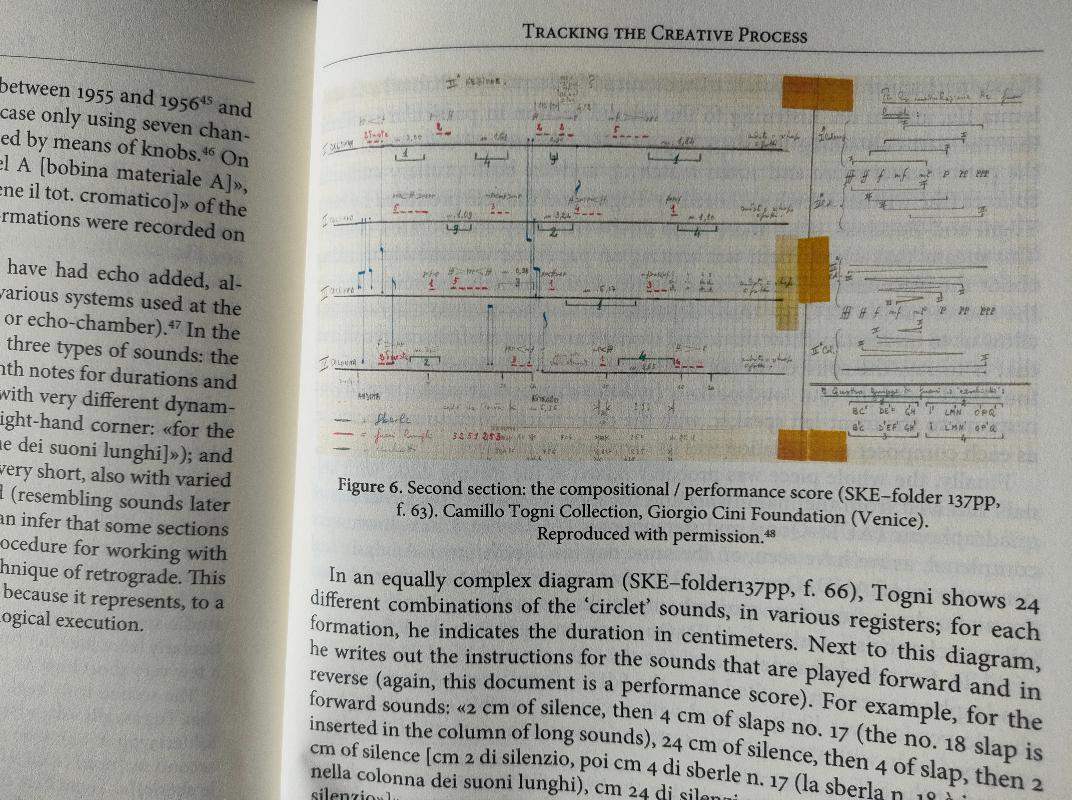
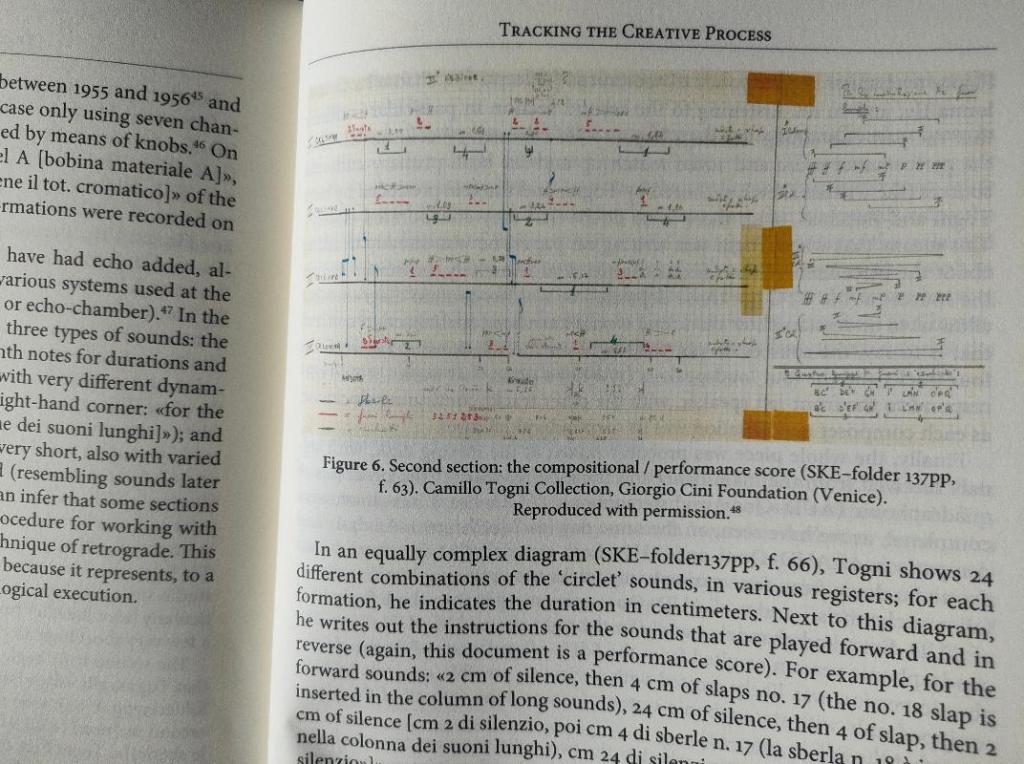
What were his motivations? How can we study his creative process? What was the detailed investigation he made about the Series (in Hertz) and how did he go from choosing the frequencies on paper to creating the sounds on tape? Did Marino Zuccheri help him? What do the remaining material traces tell us?
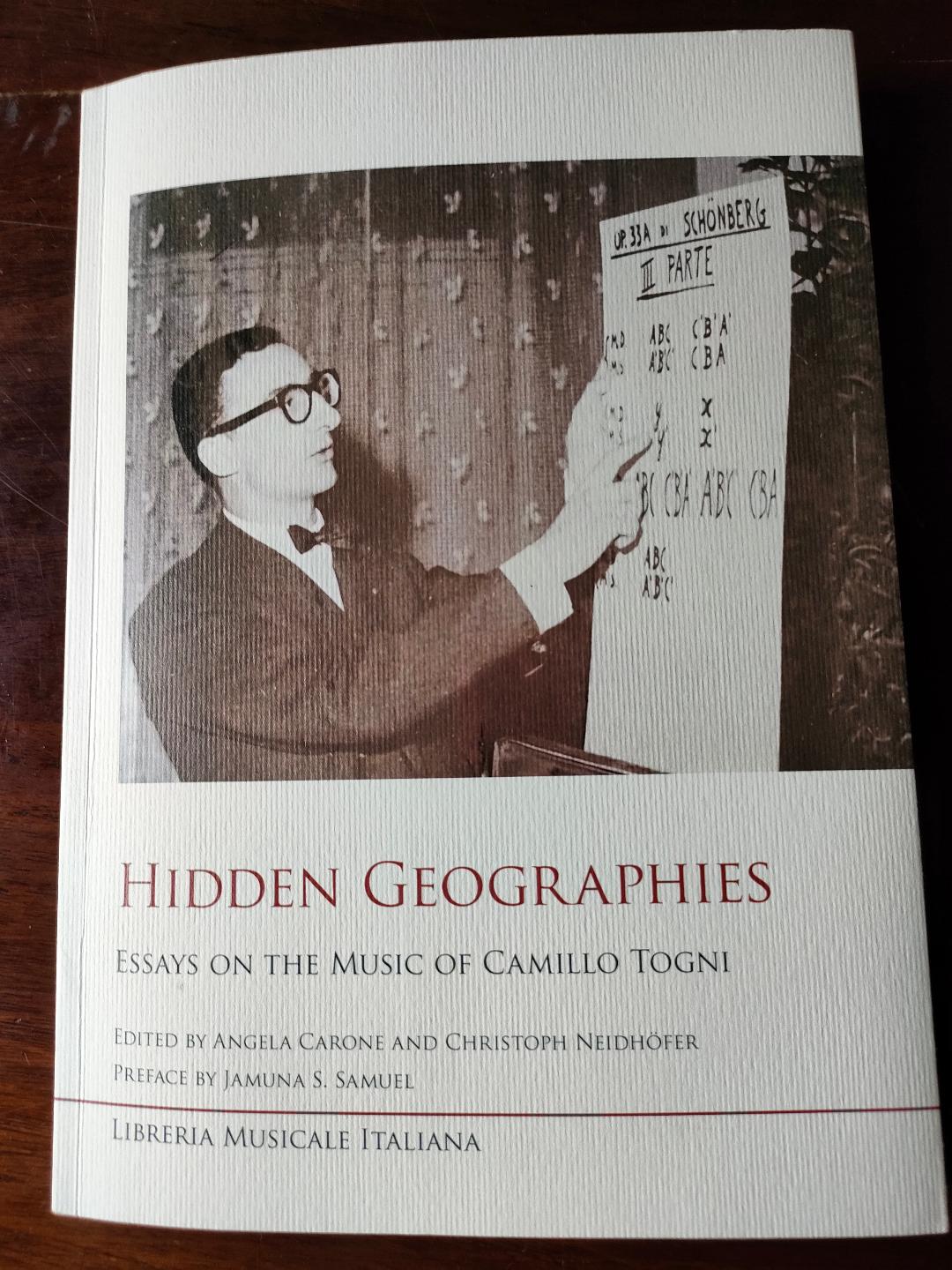
In this article I have reconstructed the history of this unicum in Togni’s production. The article appears in the beautiful volume edited by Angela Carone and Christoph Neidhöfer, with a foreword by Jamuna S. Samuel.
Hidden Geographies. Essays on the Music of Camillo Togni, edited by Angela Carone and Christoph Neidhöfer, Preface by Jamuna S. Samuel, LIM Libreria Musicale Italiana, 2025. https://www.lim.it/it/opere-collettive/6890-hidden-geographies-9788855434041.html
 laura zattra
Leave a comment