
Musical Assistant
-
Collaborative Creation in Electroacoustic Music. Comparative Analysis of Three Case Studies
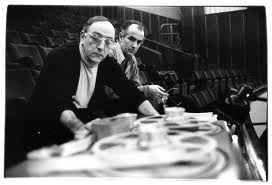
I will present my research at the EUROMAC conference, the 9th European Music Analysis Conference (Strasbourg, 28 June – 1 July 2017). TITLE: Collaborative Creation in Electroacoustic Music. Comparative Analysis of Three Case Studies ABSTRACT The revolution of sound recording, analogue synthesis and the birth of computer music, caused the emergence of a new professional profile:…
-
CSC (Centro di Sonologia Computazionale), University of Padova
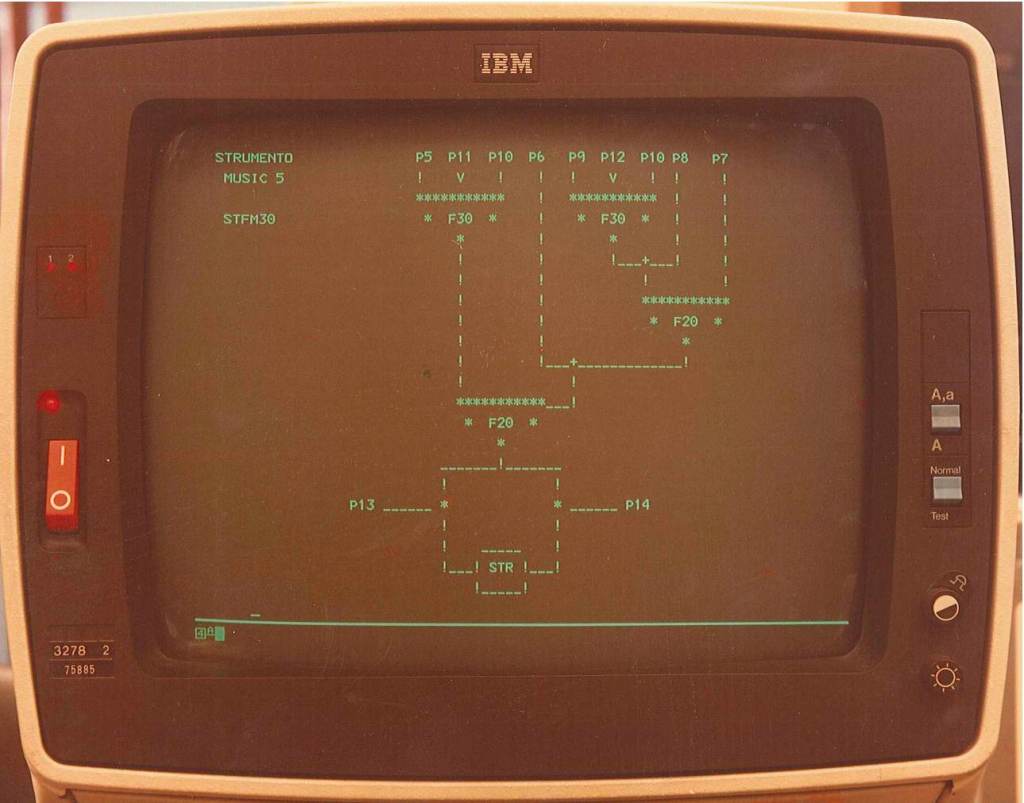
CSC’S HISTORY: The Centro di Sonologia Computazionale was funded in 1979 at Padova University. The initial research and works in the field of musical informatics date to the beginning of the ’70s. The institute was first located at the CCA – Centro di Calcolo di Ateneo (the university computing centre). Activites were based on the collaboration between engineers, musicians,…
-
‘Reversal Of The Muse’ – femininity in creativity
REVERSAL OF THE MUSE is a new blog curated by Laura Marling that explores femininity in creativity. The first podcast presents an interview with Vanessa Parr, sound engineer at The Village Studios in LA for 10 years, close collaborator of Elton John, B.B. King, Coldplay and John Mayer amongst others, and now independent sound engineer.…
-
A questionnaire-based investigation of the skills and roles of Computer Music Designers
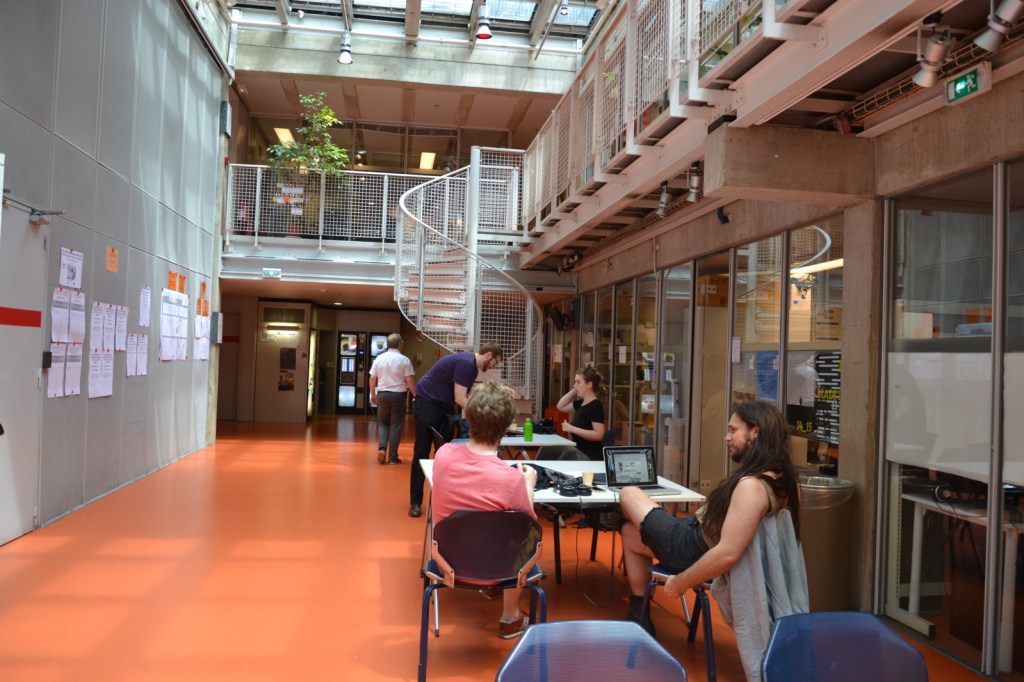
This article I co-wrote with Nicolas Donin has just been published: A questionnaire-based investigation of the skills and roles of Computer Music Designers, Musicae Scientiae, September 2016 20: 436–456, doi:10.1177/1029864915624136. This essay adds one more piece to the puzzle of the musical assistant research I’ve been developing for four years, and the implications of collaboration in the art computer music scene.…
-
Collaboration and Musical Assistants at IRCAM, CCRMA, and CSC
On Thursday 14 April, I will present my research at the AHEM (Alternative Histories of Electronic Music) conference (14-16 April 2016). And I will also chair one of the sessions. I’m looking forward to hearing hidden stories happened around the world! Abstract The revolution of sound recording, synthesis and transformation (commenced in 1948 with concrete music and…

-
“Génétiques de la computer music”
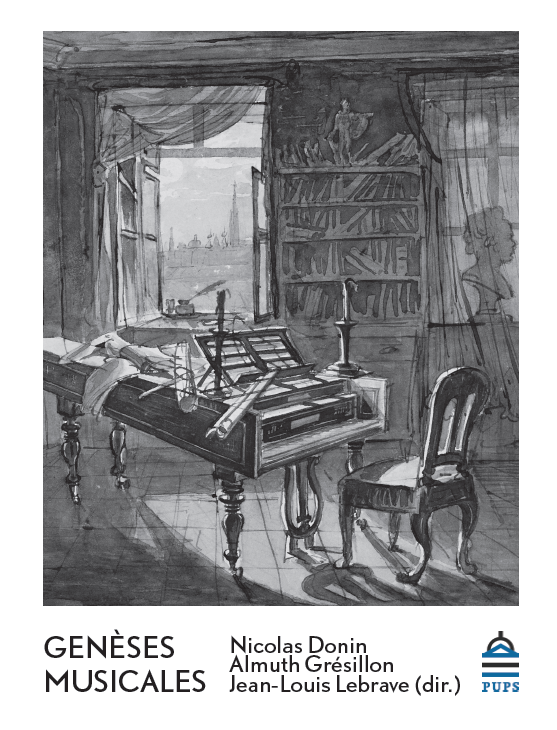
Génèse Musicales is a new book edited by Nicolas Donin, Almuth Grésillon and Jean-Louis Lebrave (PUPS, Sorbonne, october 2015). Table of contents: http://pups.paris-sorbonne.fr/catalogue/arts-et-esthetique/hors-collection-histoire-geographie-et-archeologie/geneses-musicales In a chapter entitled Génétiques de la computer music I demonstrate that techniques derives from the discipline of philology of music can be usefully applied to the study of computer music. The chapter outlines an overview…
-
“Can Composition and Performance be Research?” Forum, November 25th, London
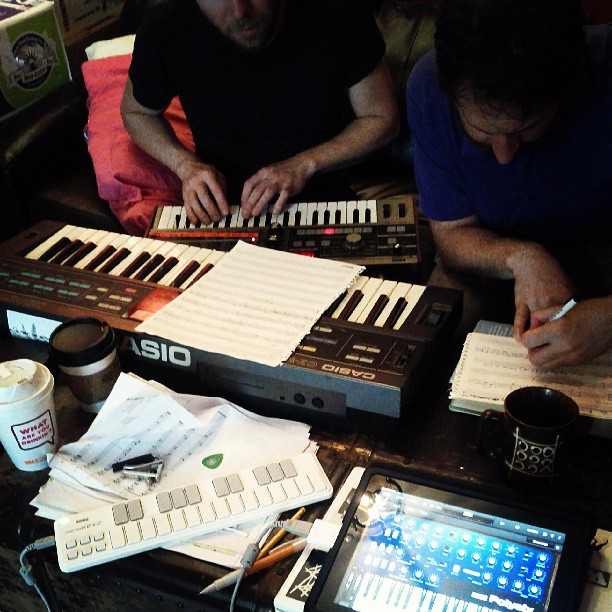
Try to imagine a research funding application from Arnold Schoenberg. Research question: ‘can I make music in which all pitch classes are played equally often?’. In his article ‘Composition is not Research’ John Croft challenges a conception and ideal of compositional work in academia (download the PDF article). The incongruity between the act of composition and the way…
-
Alternative Histories of Electronic Music
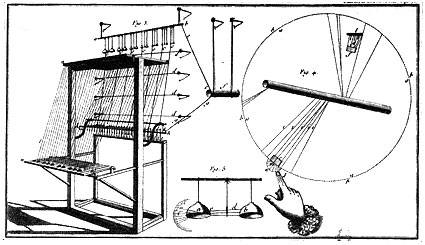
International Conference: Alternative Histories of Electronic Music: 15–16 April 2016, The Science Museum Research Centre, Queen’s Gate, London. Call for papers (Deadline: 31 October). The story of the genesis and development of electronic/electroacoustic music is often told in the same familiar way. Experiments in musique concrète in Paris and elektronische Musik in Cologne played a central role in…
-
The economics of creativity
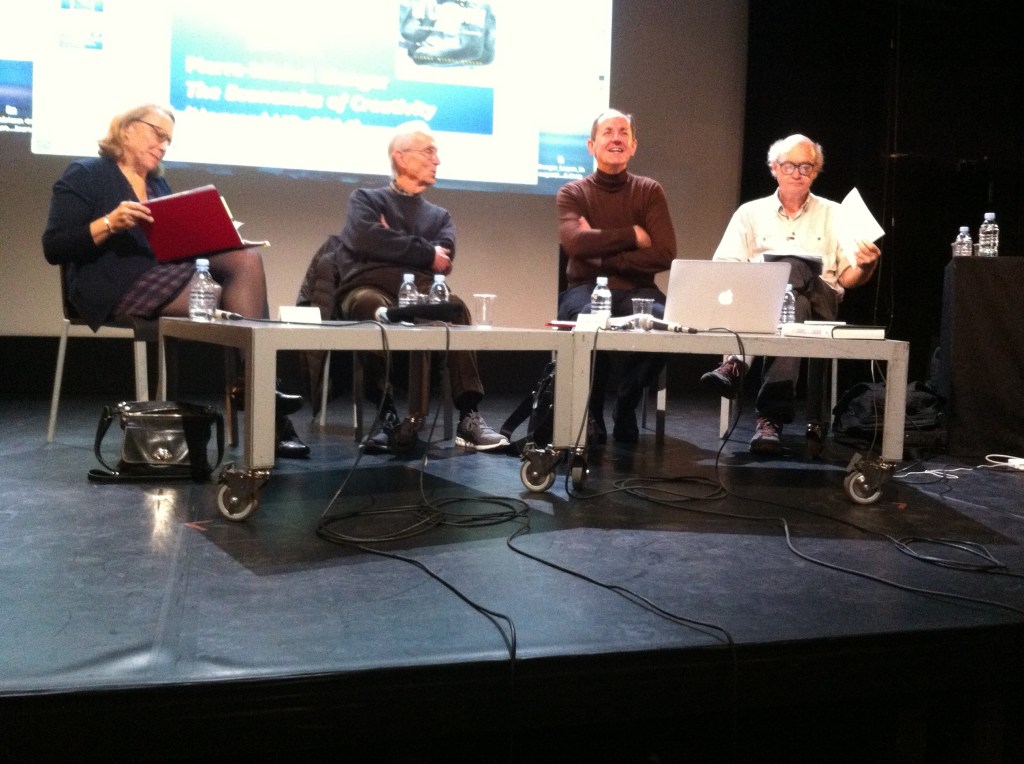
“The economics of creativity” was the heading of a round table that took place last Saturday in Paris (Centre Pompidou) in the final section of the conference Tracking the Creative Process in Music with Pierre-Michel Menger (Collège de France, EHESS), author of The Economics of Creativity (Harvard University Press, 2014), Howard Becker, Georgina Born, and Nicholas Cook (chair). In his book The…
-
The female women programmers of ENIAC
The ENIAC programmers project is a project by Kathy Kleiman, a young programmer in the mid-1980s, who has recorded oral histories with the original ENIAC female programmers in the late 1990s. Their stories were fascinating but lost for more than 50 years. In Kathy’s words: “Not only did they program the ENIAC, the first all-electronic, digital computer during WWII without manuals or programming…
 laura zattra