
computer music
-
My latest talks here and there at various International Conferences
In these last few days leading up to the end of 2025, I would like to share my latest presentations, which I have had the pleasure of giving over the last six months. I have spoken a lot about Teresa Rampazzi, and I am very happy about that, but I also discuss about the birth…
-
COMBINED METHODS TO STUDY COLLABORATION, CO-CREATION AND COLLABORATIVE PERFORMANCE IN THE DIGITAL MUSIC ERA. THREE CASE STUDIES BETWEEN ORAL HISTORY AND SOURCE CRITICISM
In my recent article COMBINED METHODS TO STUDY COLLABORATION, CO-CREATION AND COLLABORATIVE PERFORMANCE IN THE DIGITAL MUSIC ERA. THREE CASE STUDIES BETWEEN ORAL HISTORY AND SOURCE CRITICISM, I give a theoretical frame and contextualization of my research method, which I developed to study various aspects of music with new technologies (sound-based art). The combination of…
Academic, Andrea Valle, archives, Clara Iannotta, Collaborative Art, Combined method to study electroacoustic music, computer music, Fausto Romitelli, Interviews, Laurent Pottier, Live-Electronic Music, Mauro Lanza, Musical Assistant, Notation in Electroacoustic Music, Oral History, philology of music, sources for the study of electronic music, Tracking the Creative Process in Music
-
What can we deduce from the composers’ personal archives?
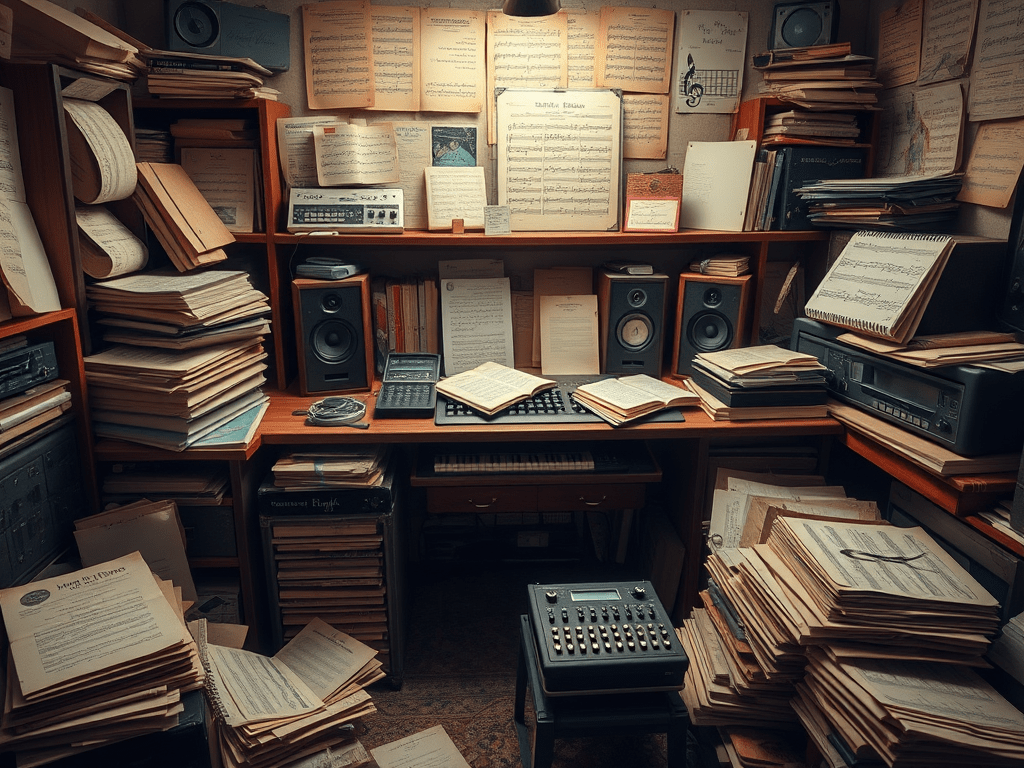
What do archives tell us about the person who has collected and organised (or disorganised) them over the years, about their own creative process, about their ‘workshop’? In this book (just published) “XENAKIS – BACK TO THE ROOTS. Philological Approaches to Electroacoustic Music” edited by Reinhold Friedl, Thomas Grĭll, Nikolaus Urbanek, and Michelle Ziegler, I…
-
A history of the first computer sound spatialization system: John Chowning’s investigations at Stanford University (1962-1972)
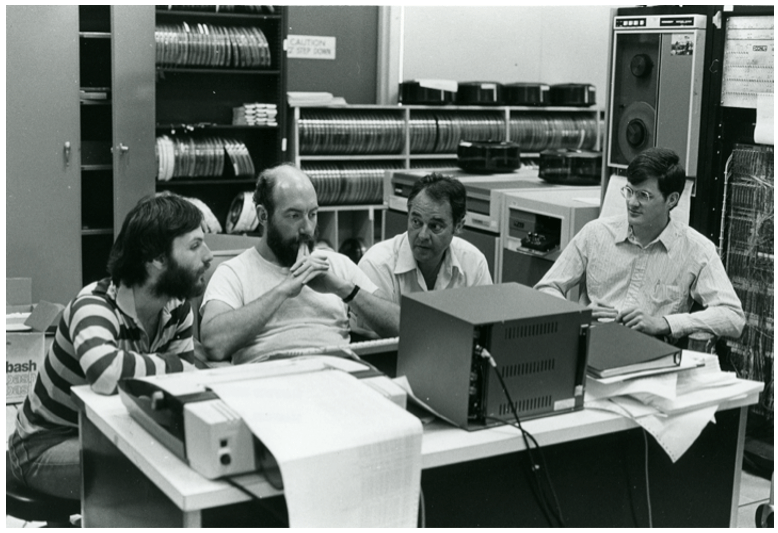
Atmos? Spatial Audio? Immersive sound? Where did it all begin?Digital sound spatialisation systems for music, cinema, videogames, VR or portable systems, would not exist without John Chowning’s algorithm.François-Xavier Féron and I are delighted to have reconstructed the “History of the first computer sound spatialisation system: John Chowning’s investigations at Stanford University (1962-1972)” published in the…
-
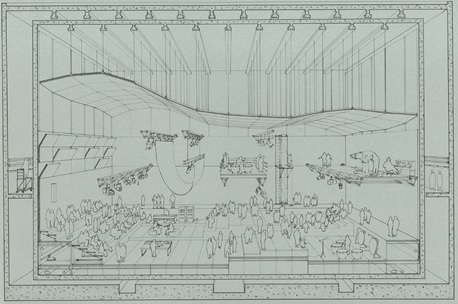
The role of John Chowning in the contruction of Ircam (1973-1977)
During the 1970s, John Chowning founded CCRMA at Stanford University and was also involved in the planning of IRCAM, the computer music center directed by Pierre Boulez. In studying different archives and conducting interviews, as part of the RAMHO project, we have reconstructed this important years between 1972 and 1977 and highlighted the links that…
-
L’Ircam et les 50 ans du Centre Pompidou
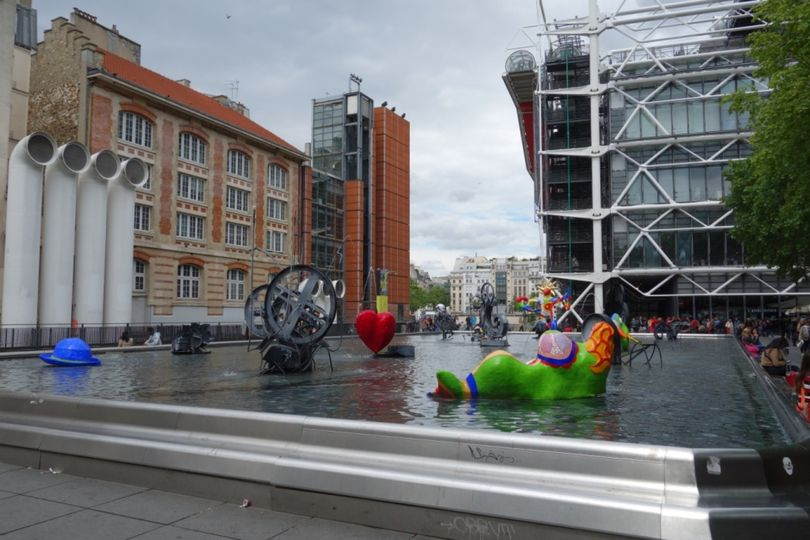
The Centre Pompidou celebrates 50 years. Next Tuesday, at the Center Pompidou in Paris, I will give a talk about the history of IRCAM (founded by Pierre Boulez to associate the Center for art and culture with a Center for musical creation) in the context of the seminars organized by the History Commission of the…
-
My keynote speech at the XXIII CIM Colloquio di Informatica Musicale
Last Thursday (October 27) I gave a keynote speech at the XXIII CIM Colloquio di Informatica Musicale in Ancona: “The Computer Instrument: mixed methods to study past, present and future between archives, lost sources and oral history”. I was also able to admire the instruments on display from the Museo del Synth Marchigiano and from…
archives, collaboration, Collaborative Art, Composers & Artists, computer music, Interviews, John Chowning, Live-Electronic Music, Luigi Nono, musicaelettronica.it, Musical Assistant, Oral History, philology of music, sources for the study of electronic music, Technology and Society, Tracking the Creative Process in Music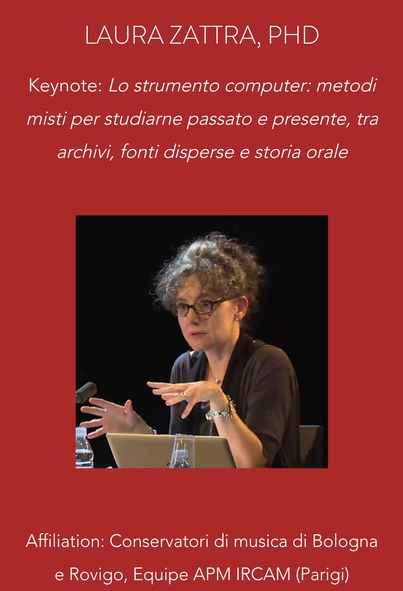
-
Computer Sounds in Luigi Nono’s Prometeo
As part of my research on collaborative creativity, on the music-technology relationship, and on the role of computer music designers / musical assistants, I studied the genesis of the computer sounds used in Luigi Nono’s Prometeo, generated with Giuseppe (Peppino) di Giugno’s 4i workstation.My paper “The Use of Technology in Revolutionary Perspective. Computer Music Research…
-
Fluxus (1979) by Teresa Rampazzi at the final concert of the Darmstadt Summer Course
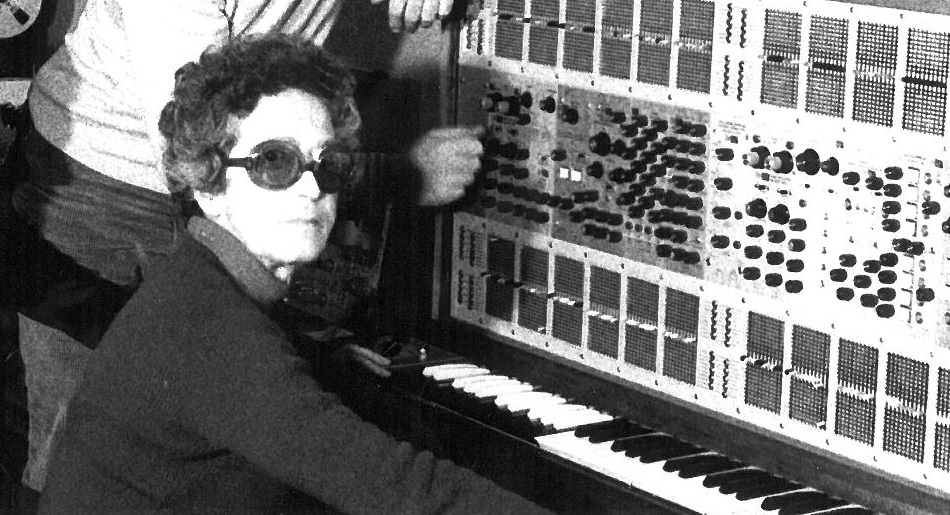
Alongside the new version of the mesmerizing piece Dust III (2018-21) by Rebecca Saunders, this evening the quadraphonic work Fluxus by Teresa Rampazzi will be performed during the final concert of the 50th Darmstadt Summer Course. After 70 years, Rampazzi is back at the Ferienkurse (she attended the course also in 1954, 1956, and until…
-
A JOURNEY AMONG ELECTRONIC MUSIC SOURCES #4 – #5
My last two articles for the column A JOURNEY AMONG ELECTRONIC MUSIC SOURCES focusses on a couple of amazing material sources (the Music 5 software in Padova and Pierre Schaeffer’s dedication to the N.P.S. Group) (#4) and the importance of oral history in the study of electroacoustic music (#5). Musica, tecnologia e società attraverso le…
 laura zattra